
Last Updated: November 5, 2026
Quick Summary
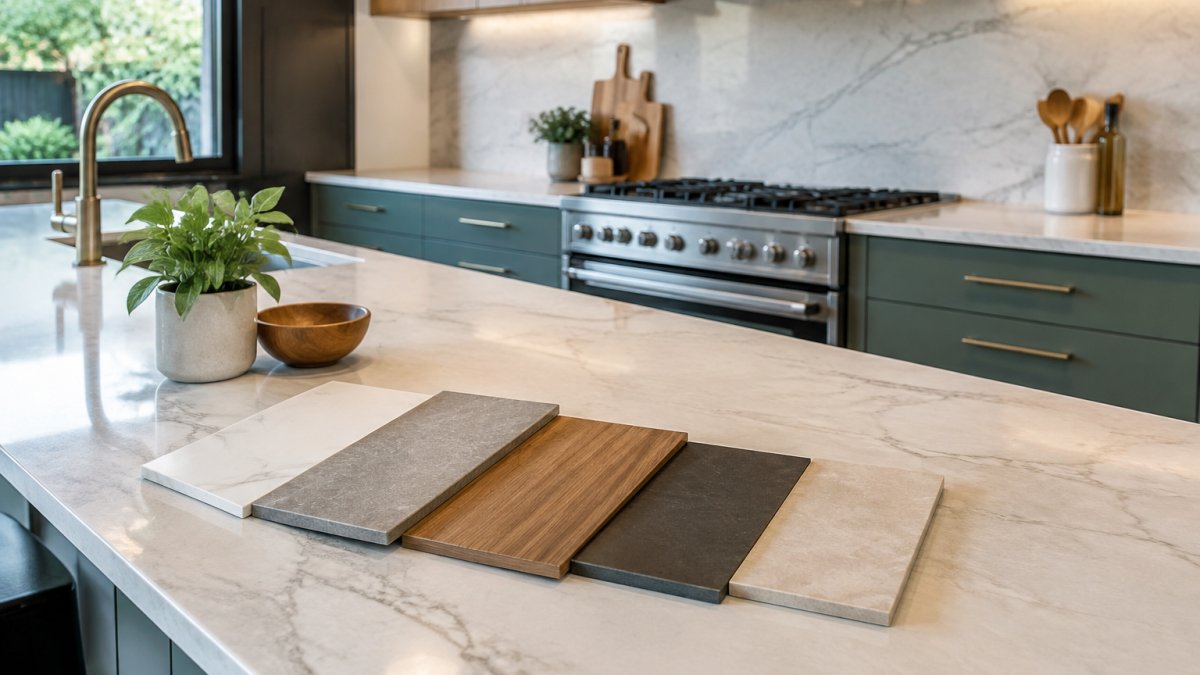
Choosing durable kitchen finishes in 2026 means matching each material to the zone that will test it hardest, then confirming sealing and hardware. Two-pack polyurethane suits busy homes, engineered stone resists staining and moisture, and matte cabinets hide fingerprints better than gloss. Always put the scope in writing before work starts.
- Two-pack polyurethane is hard, smooth, easy to wipe and the best all-rounder for busy homes.
- Textured laminate hides fingerprints and small scratches, making it suit family kitchens.
- Marble is softer and porous, so it suits low-traffic or decorative runs better than a main prep zone.
- Matte cabinets hide fingerprints and small scratches better than gloss, which shows smudges.
- Match the toughest finishes to the sink, cooktop and high-use drawer zones where wear starts.
Table of Contents
- Why Durable Kitchen Finishes Matter More Than Ever in 2026
- Durable Kitchen Cabinet Finishes: What Actually Survives Daily Use
- Best Kitchen Worktop Materials for Busy Households
- Matte vs Gloss Kitchen Cabinets: Durability, Cleaning and Repair
- Kitchen Finish Maintenance: Cleaning and Repair by Material
- Durability by Kitchen Zone: Where Finishes Fail First
- Lifecycle Cost and Value: Which Finishes Pay Off Over Time
- Choosing Finishes for Your Household and Getting a Quote
- Frequently Asked Questions
Why Durable Kitchen Finishes Matter More Than Ever in 2026
Choosing durable kitchen finishes in 2026 means picking surfaces that handle heat, moisture, knocks and daily cleaning without losing their looks. It is the single decision that decides whether your kitchen still feels new in ten years or looks tired in three.
Homeowners often spend weeks on colour and days on durability, and the finish is frequently the first thing to fail.
That is backwards. A durable kitchen finish is a surface that resists wear in the places your household actually uses it. It is not just a colour choice.
Trends for 2026 lean toward warm timber, earthy tones and matte surfaces. All three can be durable, but only if you match the material to the zone. Below, we break down the seven finishes that hold up, where each one belongs, and how to keep it looking right.
Durable Kitchen Cabinet Finishes: What Actually Survives Daily Use
Cabinet finishes differ in how they handle daily use, and each fails in different ways.
- Two-pack polyurethane: hard, smooth, easy to wipe, and the best all-rounder for busy homes.
- Textured laminate: hides fingerprints and small scratches, and suits family kitchens.
- Timber veneer: warm and natural, but needs a good topcoat and gentle cleaning.
- Satin lacquer: soft sheen, good depth, and more forgiving of marks than gloss.
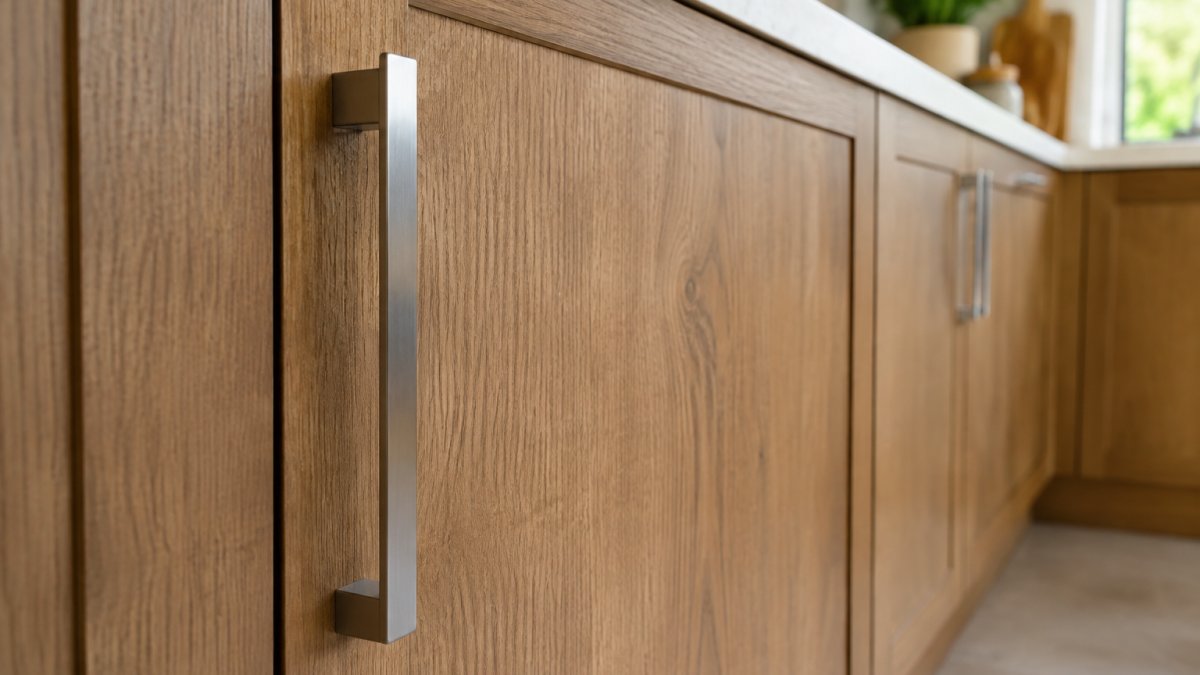
A common mistake is choosing a finish for the showroom look alone. In practice, the door style and edge sealing matter as much as the surface. Poorly sealed edges let moisture in, and that is where most failures start.
If you are weighing laminate against timber veneer, our guide to laminate vs timber veneer for cabinet doors breaks down cost, durability and upkeep.
Here is how the main cabinet finishes compare on daily wear and upkeep.
| Finish | Best for | Key difference |
|---|---|---|
| Two-pack polyurethane | Busy homes | Hard, smooth and easy to wipe |
| Textured laminate | Family kitchens | Hides fingerprints and small scratches |
| Timber veneer | Warm, natural looks | Needs a good topcoat and gentle cleaning |
| Satin lacquer | Soft sheen | More forgiving of marks than gloss |
Best Kitchen Worktop Materials for Busy Households
A useful comparison of worktop materials looks past appearance to how each one handles heat, scratches, stains, moisture and impact.
- Engineered stone: very hard and low-porosity, so it resists staining and moisture well. It handles everyday knocks but can chip at edges, and heat tolerance varies by product, always confirm the manufacturer's maximum temperature and trivet guidance rather than assuming all engineered stone behaves the same.
- Natural stone (granite, marble, quartzite): granite is hard and heat-tolerant; marble is softer, porous and etches with acids, so it suits low-traffic or decorative runs better than a main prep zone. All natural stone needs sealing, and resealing intervals depend on the stone and the sealer.
- High-pressure laminate: tough against scratches and impact for the price, and easy to wipe, but the heat tolerance is lower than stone, so hot pans and slow cookers need protection. Edge profiles and post-formed edges matter, a poorly sealed edge is where moisture gets in.
- Stainless steel: effectively heat-proof and hygienic, and the best choice for heavy cooking, but it shows scratches and fingerprints and develops a patina. Brushed rather than polished finishes hide wear better.
- Solid surface (acrylic-based): not the hardest surface, but scratches and chips can often be sanded out on site, which makes it a strong repairability pick for family kitchens.
Watch out: putting hot pans straight onto laminate or a sealed stone can leave permanent marks, and acidic cleaners or spills can etch marble and some engineered products. Always use a trivet and check the cleaner against the specific material.
When you assess samples, ask for the full specification sheet and confirm the warranty terms, including what voids them and whether they cover the surface coating or the substrate.
Matte vs Gloss Kitchen Cabinets: Durability, Cleaning and Repair
Matte cabinets hide fingerprints and small scratches better than gloss, while gloss reflects more light and is easier to wipe clean. For durability, the finish quality matters more than the sheen.
- Matte finish: hides marks, looks modern, but some textures trap grease in grooves.
- Gloss finish: bright and easy to wipe, but shows smudges and fine scratches.
- Satin finish: the middle ground, with a soft sheen and good forgiveness.
Hardware matters too. Brushed metal and polished brass handles age differently. Brushed finishes hide scratches; polished brass shows them but can be re-polished.
Kitchen Finish Maintenance: Cleaning and Repair by Material
Kitchen finish maintenance generally comes down to wiping spills quickly, avoiding harsh abrasives, and treating scratches and chips early.
- Laminate and two-pack polyurethane: damp cloth with mild detergent, then dry. Avoid scouring pads and solvent cleaners. Two-pack can often be polished or buffed for light scuffs; deep scratches are harder to blend and may need a panel replacement. Laminate chips can sometimes be filled, but colour matching is imperfect.
- Timber veneer: dry or barely damp cloth, then a suitable polish. Keep water off edges and wipe spills at once, because standing water is the enemy. Veneer can often be re-oiled or refinished, which extends its life, but sanding through the veneer is not recoverable.
- Natural stone: pH-neutral cleaner only, and reseal as the manufacturer recommends, intervals vary with the stone and sealer. Watch out: vinegar and citrus cleaners can etch the surface, and oil or wine spills can stain porous stone if left.
- Engineered stone: generally low-maintenance with mild detergent, but confirm the manufacturer's heat and chemical guidance. Some products are sensitive to certain cleaners, and chips at edges are difficult to repair invisibly.
- Brushed and polished metal: soft cloth along the grain to avoid streaks. Brushed finishes hide scratches; polished brass shows them but can be re-polished. Fingerprints and water marks are the main daily issue.
- Glass and tiled splashbacks: glass wipes clean but shows water marks and smears; grout needs periodic sealing and scrubbing to stop grease building up.
If a surface does get damaged, it is worth acting early, before moisture gets into the edges. Ask before purchase who carries out repairs, whether touch-up products are available, and whether the warranty covers refinishing.
A practical way to compare lifetime effort is to estimate cleaning time, resealing or refinishing intervals, and likely repair costs over the life of the kitchen.
Durability by Kitchen Zone: Where Finishes Fail First
Finishes in areas such as the sink, the cooktop and busy drawers face the most water, heat and handling, so it helps to match the toughest finishes to those spots.
- Sink zone: moisture and splashes. Choose sealed edges and water-resistant finishes.
- Cooktop zone: heat and grease. Use heat-tolerant splashbacks and wipe-friendly surfaces.
- High-use drawers: constant handling. Quality hardware and durable fronts matter most.
- Island and prep areas: knocks and spills. Textured or satin finishes hide wear.
Practical design matters as much as appearance, since a finish that suits a display kitchen may not hold up to everyday family use.
Lifecycle Cost and Value: Which Finishes Pay Off Over Time
Finishes that are easy to clean and repair often make more sense over time than the cheapest option up front.
Think in terms of cost per year of use rather than the sticker price, and budget a small contingency for repairs and resealing.
To plan the numbers properly, see our guide on how to avoid hidden kitchen renovation costs.
Choosing Finishes for Your Household and Getting a Quote
Choose finishes by matching material to your household, your busiest zones and your cleaning habits, then confirm the details in a written quote. That order keeps the look and the durability aligned.
- List your busiest zones and the wear they see.
- Match a durable finish to each zone.
- Check cleaning and repair needs for each material.
- Confirm edge sealing and hardware quality.
- Get a written scope and price before work starts.
If you want to see where finishes are heading, our piece on modern cabinetry design trends for 2026 covers colours, materials and layouts.
At East Coast Joinery Solutions, you deal directly with the owner, Harry, and receive clear written scope and pricing before work begins. We install both custom and supplied cabinetry, with tidy site conduct and respect for occupied homes. You can find our business and contact details to request a quote.
Picking durable kitchen finishes is a decision with real money behind it, and getting it wrong means living with the result for years. Match each finish to the zone that will test it hardest, confirm the sealing and hardware, and put the scope in writing before anyone starts. East Coast Joinery Solutions designs practical layouts around your storage needs and workflows, and installs with a clean, accurate finish. Get started with East Coast Joinery Solutions and request a free quote for finishes built to last.
Frequently Asked Questions
What is the most durable finish for kitchen cabinets?
The right cabinet finish depends on the zone: base cabinets near the sink and cooktop need the highest moisture and heat resistance, while upper cabinets can use more decorative finishes. Ask about the finishes available for your project and how each one suits your household.
Which kitchen worktop material is easiest to maintain?
Maintenance needs vary by worktop material. Natural stone such as marble generally needs sealing and careful cleaning to avoid etching. Ask about the maintenance requirements for any benchtop material before you choose it.
Are matte or gloss kitchen finishes more durable?
Neither is automatically more durable; the base material and finish quality matter more than the sheen. Choose based on your cleaning habits and the amount of natural light in the kitchen.
How do you choose kitchen finishes that are easy to clean?
Choose smooth surfaces for high-use zones and avoid deeply textured finishes near the cooktop and sink, where grease and water collect. Ask your cabinetmaker for sample chips and test them with common kitchen stains such as turmeric and oil before you commit.
