
Table of Contents
- Why Custom Cabinetry Costs More Than You Expect
- Custom Cabinets vs Flat-Pack Cabinets: Where the Money Goes
- Custom Cabinet Materials and Finishes That Drive the Price
- Labour, Design and Installation: The Costs Behind the Scenes
- How to Reduce Custom Cabinetry Costs Without Cutting Quality
- How to Get Accurate Quotes and Avoid Hidden Costs
- Are Custom Cabinets Worth It?
- Conclusion
- Frequently Asked Questions
Last Updated: October 21, 2026
Why Custom Cabinetry Costs More Than You Expect
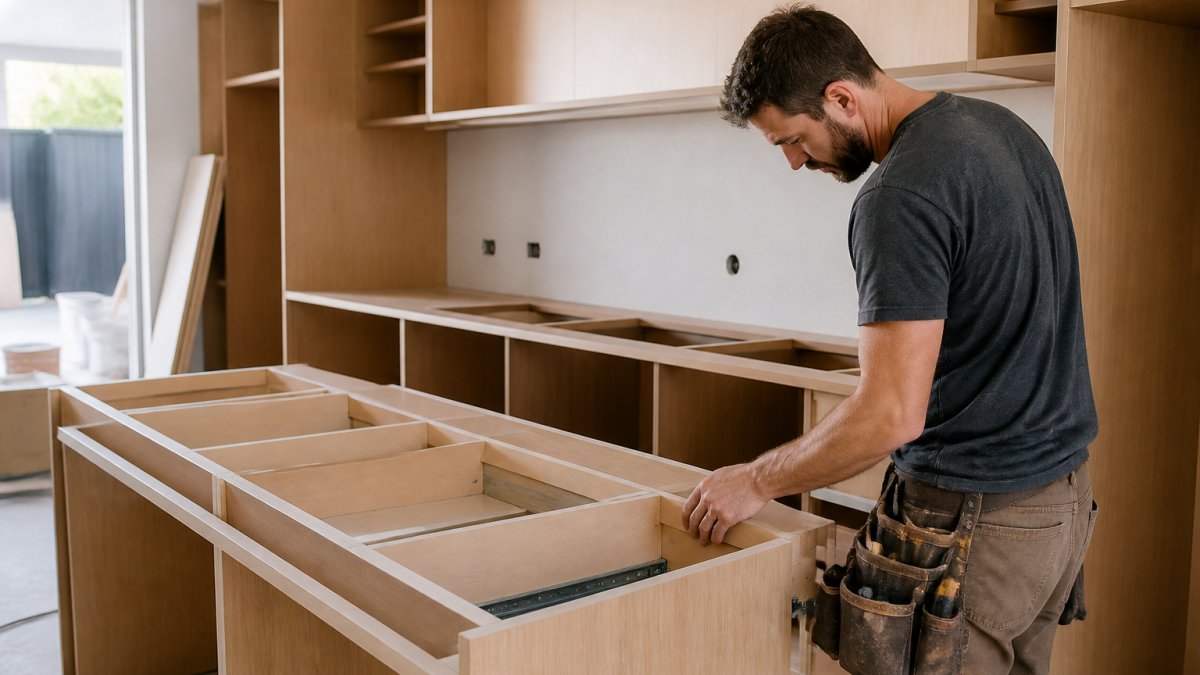
Custom cabinetry costs more because every cabinet is built for one specific space, one specific wall, and one specific household. At East Coast Joinery Solutions, we explain it to clients this way: you are not buying boxes, you are buying a measured, made-to-order solution. A flat-pack cabinet comes off a production line in fixed sizes. A custom cabinet starts with a tape measure in your kitchen.
That difference shows up in the price. It also shows up every morning when a drawer glides out exactly where you expect it.
So why does the gap feel so wide? Because most quotes only show the bottom line. The real reasons sit behind it: materials, labour, design time, and installation. Below, we break down where the money actually goes, and how to tell a fair quote from a thin one.
Custom Cabinets vs Flat-Pack Cabinets: Where the Money Goes
Flat-pack cabinets win on price because they are made in bulk to standard sizes. Custom cabinets vs flat-pack cabinets is really a question of fit versus volume. Flat-pack suits a standard wall with standard appliances. Custom suits the awkward corner, the sloped ceiling, the fridge that never quite fits.
Here is the short version of where the money goes:
- Flat-pack: mass-produced carcasses, fixed dimensions, you or an installer assemble on site
- Custom: measured carcasses, made to your layout, built and fitted by a cabinetmaker
- Flat-pack: limited door and finish options
- Custom: finishes and hardware chosen to suit the room and your use
- Flat-pack: gaps filled with filler panels
- Custom: panels designed in from the start
The filler panel is the tell. Walk into a flat-pack kitchen and you will often spot strips of matching board wedged between the cabinet and the wall. That is the cost of standard sizing made visible.
Custom Cabinet Materials and Finishes That Drive the Price
Custom cabinet materials and finishes are the biggest swing factor in any quote. Two kitchens can look identical in a photo and differ hugely in cost because of what sits under the surface.
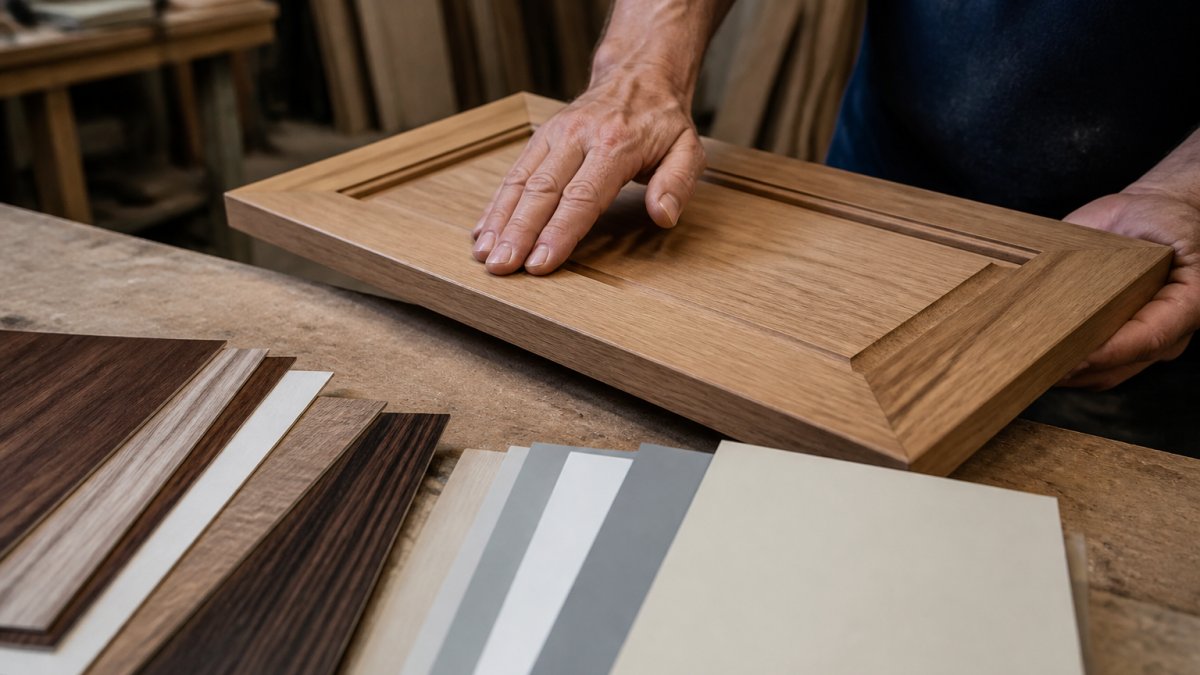
What pushes the price up:
- Solid timber costs more than board products and needs careful finishing
- Premium hardware such as soft-close runners and quality hinges adds cost but lasts longer
- Painted finishes take more prep and drying time than a factory laminate
- Custom profiles and curves mean more machining and more waste
- Two-tone or mixed finishes double the setup work
What keeps it down: standard board carcasses with a quality laminate door, and a simple, flat profile. You still get a custom fit. You just spend less on the surface.
A common mistake is choosing a premium finish for a cabinet that gets knocked about daily, like a laundry or a family kitchen. Durable beats decorative in those rooms every time.
Labour, Design and Installation: The Costs Behind the Scenes
Labour is the part clients underestimate most. A custom job involves a designer or cabinetmaker measuring the space, drawing the layout, checking appliance specs, then building and fitting. Each step takes skilled hours.
Installation is not a quick screw-in job either. Cabinets must sit level, doors must line up, and worktops must meet the carcass cleanly. On a lived-in renovation, that work happens around your furniture and your family.
This is where we see jobs go wrong. A cheap quote often skips the design stage, then charges for changes once the cabinets are cut. Clear written scope and pricing before work begins prevents that.
How to Reduce Custom Cabinetry Costs Without Cutting Quality
You can lower the bill without wrecking the result. The trick is to spend where it shows and save where it does not.
Ways to reduce custom cabinetry costs:
- Keep the layout simple. Fewer corners and curves mean less machining.
- Choose standard depths for most cabinets and go custom only where it matters.
- Spend on hardware, save on doors. Quality runners outlast a fancy finish.
- Pick one finish for the whole room instead of mixing several.
- Reuse the existing footprint where plumbing and wiring allow.
- Be ready before work starts. Clear decisions mean fewer variations.
What most guides miss is that the cheapest change is a clear brief. Every late decision adds labour, and labour is the biggest line in the quote.
How to Get Accurate Quotes and Avoid Hidden Costs
Accurate quotes start with a proper measure and a written scope. Ask for both before you compare prices. A number on the back of a business card tells you nothing about what is included.
Use this checklist when you request quotes:
- Ask for a written scope listing every cabinet, finish, and hardware item
- Confirm whether installation is included or quoted separately
- Ask how variations are priced and who approves them
- Check what happens if site measurements differ from the plan
- Confirm the timeline and who manages other trades
- Ask for the quote in writing with a clear expiry date
Then compare like for like. A quote that includes design, build, and install is not the same as a supply-only price. Line them up side by side and the real difference appears.
| What to compare | Why it matters | Ask the supplier |
|---|---|---|
| Written scope | Shows what is included | Can I see the full item list? |
| Installation | Often quoted separately | Is fitting included? |
| Variations | Prevents later surprises | How are changes priced? |
| Site measure | Confirms the fit | Who checks the final sizes? |
| Timeline | Keeps the job moving | When can you start? |
At East Coast Joinery Solutions, we provide clear written scope and pricing before work begins, so you can see exactly what you are paying for. That is the simplest defence against a job that balloons halfway through.
Are Custom Cabinets Worth It?
Are custom cabinets worth it? For most households, yes, if the room is awkward, the storage needs are specific, or you plan to stay put. Custom cabinetry is joinery built to your exact measurements and needs, rather than to a standard size. The value shows up in fit, function, and how long it lasts.
Where flat-pack wins: a simple rental kitchen, a tight budget, or a standard wall where stock sizes fit cleanly. There is no shame in that choice.
Where custom wins: a family kitchen with specific storage demands, a laundry with an odd shape, or a renovation where the layout has to work hard. In those rooms, a cabinet that fits properly saves you years of frustration. That is the honest trade.
Conclusion
The hardest part of a cabinetry project is not the price. It is trusting that the price will hold. A clear scope, a proper measure, and a written quote remove most of that worry.
At East Coast Joinery Solutions, we build practical layouts around how you actually use your space, finish them with durable hardware, and fit them tidily in occupied homes. You deal directly with the owner, Harry, from first measure to final fit. Request a free quote and get a clear written scope before you commit.
Frequently Asked Questions
Does custom cabinetry include design and installation?
In most cases, a custom cabinetry quote covers measuring, design, manufacturing and installation as one package. That is part of why custom cabinetry costs more up front: you are paying for a coordinated process rather than a flat-pack box you assemble yourself. Ask for a written scope before work begins so you know exactly which stages are included. If you are supplying your own cabinets, installation can usually be quoted as a separate service, which keeps costs clearer.
Can custom cabinets be made more affordable?
Yes. The biggest savings come from simplifying the design: fewer non-standard shapes, standard-depth cabinets where possible, and mid-range hardware instead of top-tier brands. Choosing a painted finish over a specialist veneer also reduces cost. Keeping the layout close to the existing plumbing and electrical points avoids trade rework. If you want to know how to reduce custom cabinetry costs on your project, ask for a quote with two or three finish options so you can see the difference each choice makes.
Are custom cabinets worth the extra cost?
For most renovators, yes, provided you plan to stay in the home for several years. Custom cabinets are built to fit the actual room, so there are no filler panels or awkward gaps, and the hardware and finishes are chosen to last. Flat-pack can be cheaper up front but may need replacing sooner. Whether custom cabinets are worth it depends on your timeline, your storage needs and your budget, so compare a full custom quote against a flat-pack quote including installation before deciding.
How can I compare quotes for custom cabinetry?
Ask every quote to list the same things: cabinet materials, door and drawer fronts, hardware brand, finish type, installation, and whether design and delivery are included. A single total figure hides where the differences are. Check that the scope is written down and that any allowance items are clearly marked. If one quote is much cheaper, find out what has been left out before assuming it is better value.