
Last Updated: November 1, 2026
Quick Summary
Signs your kitchen cabinets need replacing include cracks, chips and worn surfaces that let moisture into the board, warped or swollen cabinet boxes, and water damage that leaves the carcass soft or spongy. Persistent mould inside the board and doors or drawers that no longer work also point to replacement rather than repair.
- Press cabinet boards with your thumb: softness tells you more than colour does.
- Water damage almost always starts under the sink, so inspect there first.
- If a screwdriver handle leaves a dent in the board, it is past the repairable stage.
- Surface mould on sound board is a cleaning job; mould in the board means replacement.
- If hinge screw holes have stripped and the board is crumbling, new hinges will not hold.
Table of Contents
- Visible Damage: Cracks, Chips and Worn Surfaces
- Warped, Swollen or Sagging Cabinet Boxes
- Signs of Water Damage in Kitchen Cabinets
- Mould, Mildew and Persistent Musty Smells
- Doors and Drawers That No Longer Work Properly
- How Long Do Kitchen Cabinets Last?
- Repair or Replace Kitchen Cabinets: How to Decide
- The Kitchen Cabinet Replacement Process, Step by Step
- Frequently Asked Questions
Visible Damage: Cracks, Chips and Worn Surfaces
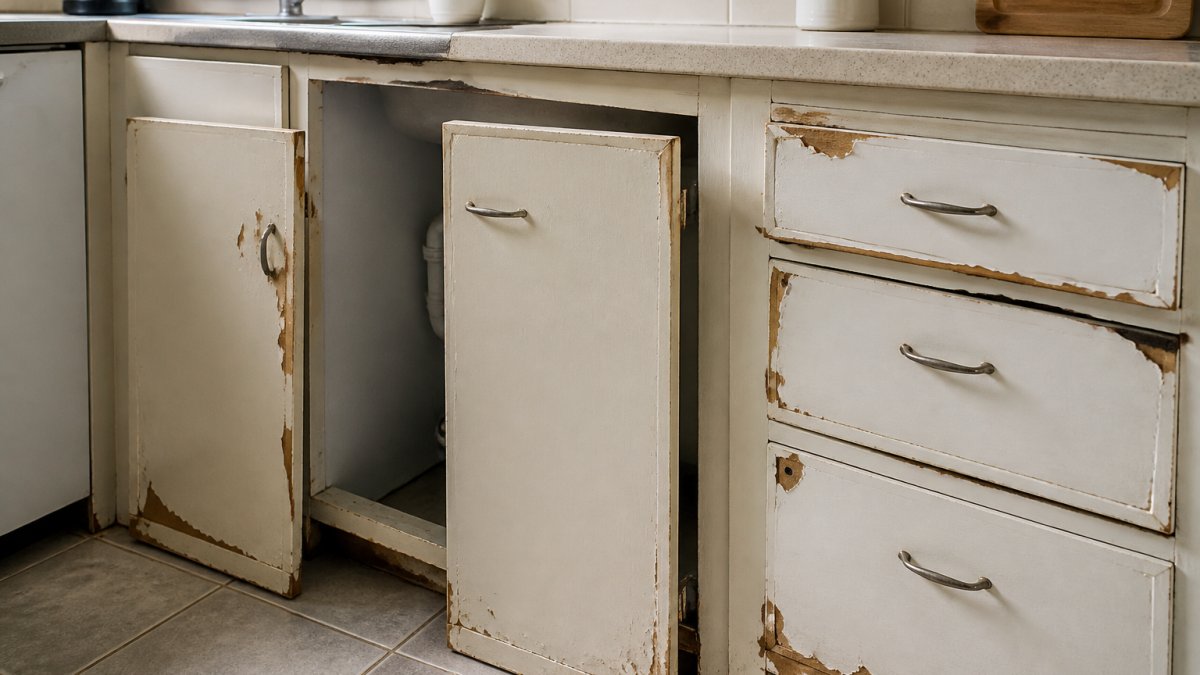
The clearest signs kitchen cabinets need replacing often start with damage you can see and feel. Cracks in the door face, chips along the edges, and surfaces worn through to the substrate are not just cosmetic problems.
A chip on a door edge looks minor until you notice the board behind it has swollen and the laminate is lifting. That is a one-way trip for most cabinet materials.
Run your hand along the door faces and drawer fronts. Any crack that runs through the surface, any chip that exposes the core, and any patch where the finish has worn away all point to the same conclusion: the cabinet is past its useful life. Standards Australia guidance on building products sets expectations for material durability that cheap cabinetry rarely meets over time.
Warped, Swollen or Sagging Cabinet Boxes
Warping and swelling are the structural warning signs that matter most.
Open a few doors and look at the base and sides of each cabinet box. Swelling shows as a soft, bulging edge, usually near the sink or dishwasher.
Watch out: if you ignore a swollen cabinet box, the weight of crockery and pans will accelerate the failure. A shelf that sags today can collapse within months.
Signs of Water Damage in Kitchen Cabinets
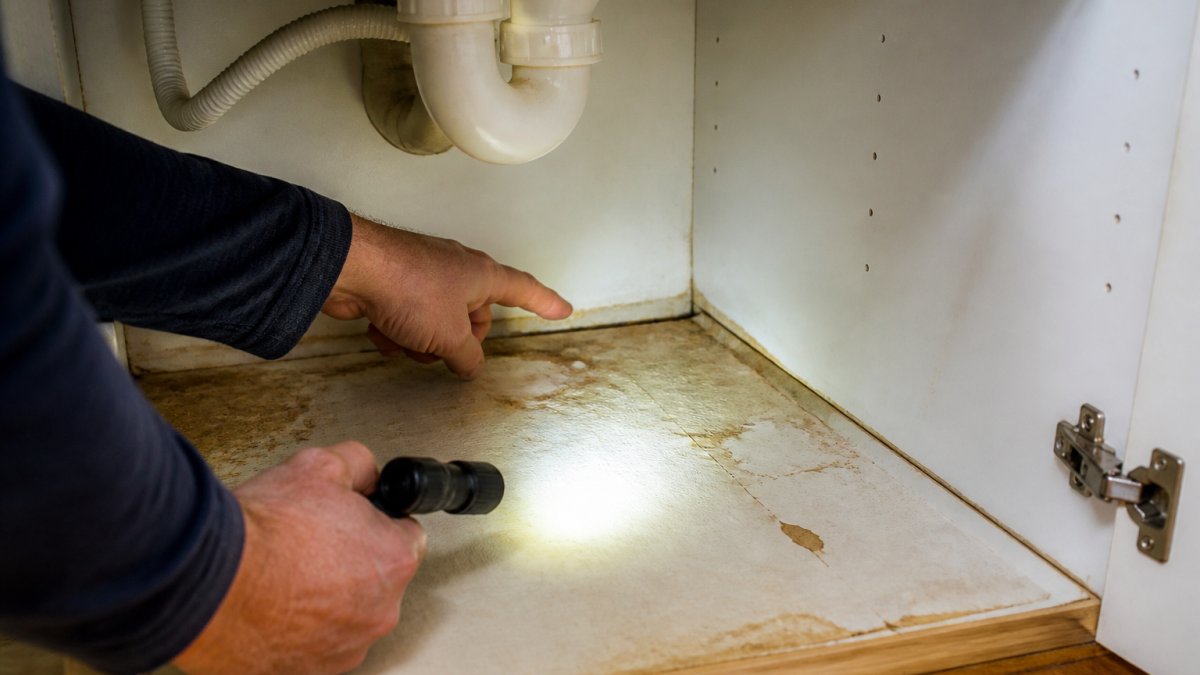
Water damage is the single most common reason kitchen cabinets fail before their time. The signs are easy to spot once you know where to look, and they almost always start under the sink.
Where to inspect
Work through these zones with a torch and a dry cloth. Press firmly with your thumb as you go, softness tells you more than colour does.
- Under the sink and around the waste trap. The base panel, the back panel and the side panels closest to the pipes.
- Around the dishwasher and washing machine. Look at the cabinet sides facing the appliance, and the plinth below.
- Under the hob and extractor run. Steam condenses on the underside of wall cabinets and drips down the back panel.
Grade what you find
Use these three tiers to decide how urgent the problem is.
| Tier | What you see | What it usually means |
|---|---|---|
| Cosmetic | Light surface staining, no softness, no swelling, no smell | Clean and dry the area, fix the leak source, monitor for a few weeks |
| Localised | One cabinet affected, board firm but stained, laminate lifting at an edge | That cabinet can often be replaced or repaired without touching the rest of the run |
| Structural | Soft or spongy board, swelling that has changed the shape of the box, water pooling, musty smell that returns | The carcass has absorbed water; replacement of the affected units is usually the sensible call |
Water pooling is the most serious of these. Standing water means an active leak, and the cabinet board is absorbing it right now. Even a slow drip from a tap or waste pipe will rot a cabinet base over a season or two. Fix the leak first, then assess whether the cabinet is worth saving.
The mechanism that matters
Most cabinet boards are particleboard or MDF with a melamine or veneer face. The face is water-resistant; the core is not. Once water gets past an edge, a screw hole or a lifted seam, the core swells and cannot shrink back. That is why a water-damaged cabinet rarely recovers even after it dries out, the swelling has changed the dimensions, and doors and drawers will no longer sit true.
Before you replace
Two checks are worth doing before you commit to new cabinetry. First, confirm the leak is fixed, a new cabinet under an active drip will fail the same way. Second, check whether the damage is confined to one or two units; a single damaged base cabinet beside a sink can often be swapped out while the rest of the run stays, far cheaper than a full replacement.
Mould, Mildew and Persistent Musty Smells
Mould and mildew inside a cabinet are a health issue, not just a cleaning problem. Black spotting on the back panel, a white powdery film on shelves, and a musty smell that returns within days of cleaning all indicate ongoing moisture. The gap most guides leave is how to tell surface mould from mould that has colonised the board, and when to stop cleaning and start planning replacement.
Surface mould versus mould in the board
The distinction matters because it changes the remedy.
- Surface mould sits on the face of the board, usually on a back panel or shelf. It wipes away, the board underneath is firm, and the smell clears once the area is dried and ventilated.
- Mould in the board has grown into the core through a damp edge, a screw hole or a water-damaged seam. Cleaning the surface does not remove it, the smell returns within days, and the board may feel soft or look stained below the surface.
Cabinet materials are porous. Once mould takes hold in the board, surface cleaning does not remove it. The spores sit inside the material and keep releasing into the air every time you open the door. This matters most in kitchens because that is where food is stored.
Health and safety implications
Mould exposure is a particular concern for people with asthma, allergies or weakened immune systems, and for young children. In a kitchen, spores can settle on food, utensils and preparation surfaces.
If mould keeps returning after cleaning and drying, or anyone in the household is reacting to it, bring in a professional assessment rather than continuing to clean. A qualified tradesperson can confirm whether the moisture source is plumbing, ventilation or a building issue, and whether the cabinetry needs to come out.
What to do next
- Find the moisture source. Check under the sink for drips, look at the sealant around the sink and splashback, and confirm the extractor fan is actually moving air.
- Dry and ventilate. Leave doors open, run the extractor, and use a dehumidifier in the room for a few days.
- Recheck after a week. If the smell has gone and the board is firm, monitor. If the smell returns or the board is soft, the mould is in the material.
- Decide repair or replace. Surface mould on sound board is a cleaning and ventilation job. Mould in the board, or mould that keeps returning, points to replacement of the affected units, and a check of the plumbing and ventilation so the new cabinets do not suffer the same fate.
Doors and Drawers That No Longer Work Properly
Doors that will not close, drawers that stick, and hinges that have torn loose from the cabinet box are classic signs kitchen cabinets need replacing rather than repairing. Hardware is cheap to replace. The board it screws into is not.
Here is the distinction that matters. If a hinge has failed but the cabinet box is solid, you can fit new hardware.
Check for these failures:
- Doors that hang crooked or rub against the frame
- Drawers that jump their runners or will not slide smoothly
- Hinges pulling away from the door or the carcass
How Long Do Kitchen Cabinets Last?
How long kitchen cabinets last depends on the materials, the hardware, and how much moisture they have been exposed to. Build quality generally matters more than age.
CHOICE guidance on kitchen renovation planning recommends assessing the condition of existing cabinetry before committing to a renovation budget, because replacing sound cabinets is money you do not need to spend.
The honest answer is that lifespan depends on build quality more than age. A well-built cabinet at 20 years old can be in better condition than a cheap one at eight. Why flat-pack kitchen cabinets fall short explains why budget cabinetry fails sooner on fit, durability and long-term value.
Repair or Replace Kitchen Cabinets: How to Decide
The repair or replace kitchen cabinets decision comes down to three things: the condition of the cabinet boxes, the extent of water or mould damage, and whether the layout still works for how you cook.
Consider the following situations:
| Situation | Recommendation | Why |
|---|---|---|
| Solid boxes, worn doors only | Reface or replace doors | Carcass is sound, so cost stays low |
| Isolated water damage, one cabinet | Repair that cabinet | Localised damage, rest of kitchen fine |
| Swollen or soft cabinet boxes | Replace | Structural failure cannot be reversed |
| Mould inside the board | Replace | Spores remain in the material |
| Layout creates bottlenecks | Replace and redesign | Functionality will not improve otherwise |
| Outdated appearance, sound boxes | Refacing is viable | Appearance is the only issue |
The trap most homeowners fall into is spending on new doors for cabinets that are failing behind them. If the boxes are soft, the new doors will not fix the problem. Why custom cabinetry costs more breaks down where the money actually goes, which helps you judge whether new cabinetry is worth the outlay. If you are leaning towards a fresh design, our ideas, advice and inspiration collection shows what is possible with new joinery.
The Kitchen Cabinet Replacement Process, Step by Step
The kitchen cabinet replacement process follows a predictable sequence, and knowing it upfront stops surprises. Here is how we approach it.
- Measure and assess. We check the existing layout, plumbing and power positions, and confirm what can stay and what must move.
- Design the layout. Practical layouts are built around your storage needs and how you move around the kitchen, not just how it looks on a plan.
- Confirm the written scope and price. Pricing depends on the scope of the job, so check current pricing on our website or request a quote before work begins.
- Manufacture the cabinetry. Cabinets are built to the confirmed measurements.
- Remove the old cabinets. We aim to keep the site tidy and respect occupied homes during the work.
- Install and finish. Cabinets are installed with a clean finish.
- Final check and handover. We walk through the finished job with you and confirm everything works as it should.
Two things to sort out before you commit. First, budget for the unexpected: how to avoid hidden kitchen renovation costs sets out a transparent quote checklist and a contingency approach. Second, choose your installer carefully, and our guide to the questions to ask before hiring a kitchen installer covers what to raise before you appoint anyone.
Frequently Asked Questions
Can damaged kitchen cabinets be repaired, or do they need replacing?
It depends on how far the damage has spread. Surface issues such as worn finish, loose hinges or a single cracked door can usually be repaired or the door replaced. Problems inside the cabinet boxes, including swelling, soft board, mould or sagging shelves, are harder to fix because the structural panel has already failed. If more than a few boxes are affected, replacing the cabinetry is usually the more reliable option, and a joiner can assess this on site.
What is the average lifespan of kitchen cabinets?
Most well-built kitchen cabinets last around 20 to 30 years, and some quality timber or laminate builds last longer with good care. Cheaper particleboard boxes in wet or humid areas often fail sooner, sometimes within 10 to 15 years. Lifespan depends on the materials, how well the cabinets handle moisture and steam, and whether hinges, runners and seals are maintained. Cabinets near a sink, dishwasher or hob tend to age fastest.
How can you tell if kitchen cabinets have water damage?
Look for dark stains or tide marks on the cabinet floor and base panels, board that has swollen and no longer sits flush, a soft or spongy feel when pressed, and peeling laminate or bubbling veneer. A persistent musty smell inside the cupboards, or mould spots in the corners, points to ongoing moisture. Check under the sink and around the dishwasher first, since these are the most common sources of leaks.
Is it worth replacing kitchen cabinets if the layout still works?
Yes, if the boxes and hardware are failing. You can keep the same footprint and replace the cabinetry with new boxes, doors and drawers built to the existing layout, which avoids plumbing and electrical changes. This suits homeowners who like how the kitchen functions but are dealing with sagging shelves, broken runners or outdated finishes. A joiner can confirm whether the existing layout is worth keeping before you commit.
If your cabinets are showing two or more of these signs, patching them up usually costs more than it saves. At East Coast Joinery Solutions, we build custom cabinetry around how you actually use your kitchen, with durable finishes and quality hardware, and we install it with a clean, tidy site and a written scope agreed before work starts. Get started with East Coast Joinery Solutions and replace failing cabinets with joinery built to last. Request a free quote today.
